18-21 May, 2027, Zaragoza, Spain
VII INTERNATIONAL CONFERENCE ON ARCHITECTURE AND GENDER
in collaboration with WAR/F research project
ICAG
2027
ON REPRESENTATION
CALL FOR CONTRIBUTIONS
In the last decade, we have witnessed an intense proliferation of studies, publications, and initiatives dedicated to recovering and making visible women in all their diversity in architecture. Academic articles, reviews, exhibitions, photographs, carousels on social networks, blogs, podcasts, texts and images generated with artificial intelligence, documentaries, fiction, and biographical films about women architects circulate today with an unprecedented presence. However, this growing visibility raises new questions: how is the media constructing the collective memory of women in architecture? How are their lives and works narrated? Which stories are privileged and which remain invisible? From what perspectives —patriarchal, feminist, institutional, commercial, Eurocentric, etc.— is this new historical and cultural imaginary being configured?
Beyond recovering names and trajectories, this VII International Conference on Architecture and Gender (ICAG) is interested in debating the mechanisms through which knowledge about women in architecture is produced, transmitted and legitimized: what images, discourses and narratives contribute to shaping collective memory?, what stereotypes and gender roles persist in contemporary representations?, how do strategies of invisibility, exceptionalization or mythification operate?, what differences exist between forms of documentary representation, (auto)biography and fiction?, what role do new digital media and artificial intelligence play in the construction of new references that challenge canonical and orthodox representations for present and future generations?
This conference is based on the premise that the media and cultural industries not only reflect reality but also produce knowledge, shape imaginaries, and condition the social valuation of women in architecture. In a context where audiovisual and digital materials are a common resource in the teaching, research, and dissemination of architecture, it is especially necessary to discuss the extent to which these discourses contribute to greater gender equality in architecture and to the construction of inclusive societies.
18-21 May, 2027, Zaragoza, Spain
VII INTERNATIONAL CONFERENCE ON ARCHITECTURE AND GENDER
in collaboration with WAR/F research project
ICAG
2027
ON REPRESENTATION
LLAMADA A CONTRIBUCIONES
En la última década hemos asistido a una intensa proliferación de estudios, publicaciones e iniciativas dedicados a recuperar y visibilizar a las mujeres en toda su diversidad en la arquitectura. Artículos académicos, reseñas, exposiciones, fotografías, carruseles en redes sociales, blogs, pódcasts, textos e imágenes generados con inteligencia artificial, documentales y películas de ficción y biográficas sobre arquitectas circulan hoy con una presencia inédita. Sin embargo, esta creciente visibilidad plantea nuevas preguntas: ¿cómo se está construyendo mediáticamente la memoria colectiva de las mujeres en la arquitectura?, ¿de qué manera se narran sus vidas y sus obras?, ¿qué relatos se privilegian y cuáles permanecen invisibles?, ¿desde qué miradas —patriarcales, feministas, institucionales, comerciales, eurocéntricas, etc.— se está configurando este nuevo imaginario histórico y cultural?
Este congreso parte de la premisa de que los medios de comunicación y las industrias culturales no solo reflejan la realidad, sino que también producen conocimiento, modelan imaginarios y condicionan la valoración social de las mujeres en la arquitectura. En un contexto en el que el uso de materiales audiovisuales y digitales constituye un recurso habitual en la enseñanza, la investigación y la divulgación de la arquitectura, resulta especialmente necesario debatir hasta qué punto estos discursos contribuyen a una mayor igualdad de géneros en la arquitectura y a la construcción de sociedades inclusivas.
Más allá de recuperar nombres y trayectorias, este VII Congreso Internacional sobre Arquitectura y Género (ICAG) se interesa por debatir sobre los mecanismos mediante los cuales se produce, transmite y legitima el conocimiento sobre las mujeres en la arquitectura: ¿qué imágenes, discursos y narrativas contribuyen a conformar la memoria colectiva?, ¿qué estereotipos y roles de género persisten en las representaciones contemporáneas?, ¿cómo operan las estrategias de invisibilización, excepcionalización o mitificación?, ¿qué diferencias existen entre las formas de representación documental, la (auto)biografía y la ficción?, ¿qué papel desempeñan los nuevos medios digitales y la inteligencia artificial en la construcción de nuevos referentes que desafíen representaciones canónicas y ortodoxas para las generaciones presentes y futuras?
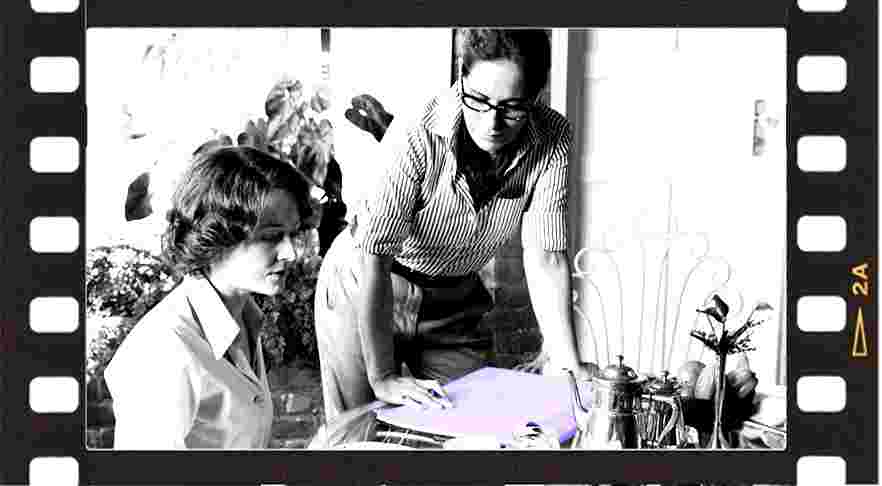
“Representation Matters”
Rosalind Gill, Gender and the Media, Cambridge: Polity, 2007, 7.
Lines of Debate
The VII ICAG, in collaboration with the WAR/F project, which studies the image of women architects in commercial cinema throughout the twentieth century, proposes to open a wide space for reflection on the representation of women and other social minorities in architecture. From a historical, historiographical, and critical perspective, and from an intersectional and multicultural analysis, this conference invites research that analyses the image and representation of women and minorities interested in architecture in different written and audiovisual media, such as specialised magazines, general press, books, cinema, documentaries, podcasts, digital platforms, social networks, or any other cultural dissemination medium.
This edition of the congress aspires to become an international forum to discuss the role of media and cultural discourses in constructing the social valuation of women in architecture. Through six lines of work, the following debates are proposed:
Line 1: The Biographies
What kind of biographies are considered “appropriate” in different media? What aspects are visible? Do we still need biographies? This line of debate seeks critical analyses of how the lives of women and minorities linked to architecture are represented in media, encouraging debates on gender biases, intersectional approaches, and comparative perspectives.
Line 2: The Contributions
What kind of contributions to architecture are “accepted”, valued, and made visible by the different media? This line of debate seeks critical analyses of the representation of the professional work of women and minorities linked to architecture, as well as other agents of the built environment, which promote constructive debates on the contributions that “enter” or “are left out” of the media and cultural field of architecture.
Line 3: The Pioneers
Is the very concept of “pioneer” canonical? This line of debate seeks critical reflections on the media construction of pioneering women, questioning the concept itself through an intersectional and multicultural approach, as well as its historical and historiographical implications and how these narratives consolidate or challenge established canons.
Line 4: The Self-representations
How do women and minorities linked to architecture make use of the media? This line of debate seeks research on how women architects build and have built their own public image on social networks, press or other media, and on how these strategies influence professional practice, the development of feminist advances and discourses, and their social impact.
Line 5: The Feminisms
How do feminisms and their professional practices promote and/or encourage the media? This line of debate seeks to analyse how the relevance, validity, and scope of feminist practices are communicated to society in general and how the experiences, needs, and ways of living of women and minorities are transmitted.
Line 6: The Pedagogies
To what extent is the knowledge generated in the last decade on gender, women and architecture transforming education? What role do the media and artificial intelligence play in this? This line of debate seeks studies on the role of the media in teaching architecture and in developing teaching practices that promote a more egalitarian, inclusive, critical, and gender-sensitive education.
Line 7: Line 7: The Other
What other discourses would you be interested in proposing?
Key dates
September 7, 2026. Launch of the call for contributions.
January 4, 2027. Deadline for submission of contributions.
February 5, 2027. Notification of acceptance.
March 5, 2027. Deadline for registrations.
18-21 May 2027. Celebration of the congress.
Guidelines for Authors
Fill in the following form with your details, a contribution proposal of between 500 and 600 words, the title of the contribution, bibliographic references, and a brief curriculum vitae of the authors. It is necessary to indicate in which line of debate the proposal is situated. Proposals are accepted in Spanish and English. The conference includes participation by researchers both in person and online.
For any questions about the submission of proposals and/or the organisation of the VII ICAG, you can send an email to the following address: warf@unizar.es
Publication
The conference will produce an open-access abstract volume with an ISBN, published by the University of Zaragoza’s publications service. Several other publications are also planned, one of which is already underway.
The WAR/F team is coordinating a special issue of the indexed academic journal Fotocinema (SJR Q1) titled “Architects on the Big Screen: Genres, Representations, and Identities.“
The call for academic papers is open until March 20, 2027. You may submit an expanded version (7,000 words) of the proposal you presented at the VII ICAG and participate in both activities. Submissions will undergo peer review. Proposals in both Spanish and English are accepted.
Further information about Fotocinema is available on this website. For any inquiries, please email: warf@unizar.es
Registration Fee
This congress is supported by a grant from the Women’s Institute of the Ministry of Equality (22-1ACT-26), co-financed with the WAR/F project funded by the Ministry of Science, Innovation and Universities (PID2022-136975OB-I00), and supported by various feminist entities and collectives.


- General rate (researchers, university professors and professionals): €180.
- Reduced general rate (countries with low GDP*): €120.
- Student fee (undergraduate, postgraduate and doctorate): €120.
- Reduced rate for students (countries with low GDP*): €80.
*Low GDP: Fee to be applied to members/attendees residing in any of these countries: African countries, Asian countries (with the following exceptions: Israel, Japan, South Korea, Taiwan, Saudi Arabia, United Arab Emirates, Kuwait, Oman and Qatar), Latin American countries, and the following European countries: Albania, Belarus, Bosnia-Herzegovina, Bulgaria, Croatia, Cyprus, Czech Republic, Estonia, Hungary, Iceland, Latvia, Lithuania, Macedonia, Malta, Moldova, Montenegro, Poland, Romania, Russia, Serbia, Slovakia, Slovenia, Turkey and Ukraine.
WAR/F film cycle
As part of the program of this VII ICAG, a film cycle will be held with a selection of five outstanding feminist films analysed within the framework of the WAR/F project. The cycle is open to all congress attendees, architecture students, and interested architecture professionals.
The selected films are:
Each screening will be followed by a discussion on the film with members of the WAR/F research project, specialised in each situation and geographical region, as well as with leading contemporary feminist filmmakers.
Erti tsis kvesh (Georgia, 1961), by Georgian director Lana Gogoberidze. It is a pioneering film from the time of Soviet domination that presents a ‘fantastic’ vision of women in architecture.
Quelque part quelqu’un(France, 1972), by the Basque-French director Yannick Bellon. It is a film representative of the feminist demands of the second wave in France.
Debiutantka (Poland, 1982), by Polish director Barbara Sass. It is a film linked to the situation in communist-era Eastern Europe, with feminist demands tied to class and gender relations.
Do Zan (Iran, 1999), by Iranian architect and filmmaker Tahmineh Milani. It proposes an intersectional look at the state of women’s education in architecture in Iran, extending the discourse to religious issues in coercive patriarchal societies.
Husek (Argentina, 2021), by Argentinian director Daniela Seggiaro. It proposes a decolonial look at architecture, bringing the discourse to ecofeminist, anti-extractivist, and racial issues.
Coordinators of the VII ICAG
Lucía C. Pérez-Moreno, Full Professor at the University of Zaragoza. PI of the WAR/F project.
Luis Miguel (Koldo) Lus-Arana, Professor at the University of Zaragoza. PI of the WAR/F project.
Laura Ruiz-Morote Tramblin, PhD fellow at the University of Zaragoza. WAR/F project team. [Conference Secretary]
National Scientific Committee
International Scientific Committee
Nuria Álvarez Lombardero, Assistant Professor at the University of Alcalá. Organiser of the I ICAG2014 in Seville.
Serafina Amoroso, Lecturer at the Rey Juan Carlos University. Organiser of the III ICAG2017 in Florence and member of the WAR/F project team.
Eva Álvarez, Professor at the Universitat Politècnica de València. Organiser of the VI ICAG2023 in Valencia.
David Delgado Baudet, Assistant Professor at the Rey Juan Carlos University. WAR/F project team.
Carlos Gómez, Professor at the Universitat Politècnica de València. Organiser of the VI ICAG2023 in Valencia.
Beatriz González Jiménez, Associate Professor at the Polytechnic University of Madrid. WAR/F project team.
Virginia de Jorge Huertas, Lecturer, Universidad Rey Juan Carlos. WAR/F project team.
Dafne Saldaña Blasco, consultant, founder of Equal Saree. Organiser of the III ICAG 2017 in Florence.
Amelia Vilaplana, Assistant Professor at the University of Alicante. Organiser of the III ICAG 2017 in Florence.
Katerina Chatzikonstantinou, Assistant Professor at the University of Thessaly (Greece). Member of the WAR/F project team.
Irina Dikhaminjia, Lecturer at the Free University of Tbilisi (Georgia). WAR/F project team.
Tata Koiava, Lecturer at the Free University of Tbilisi (Georgia). WAR/F project team.
Sasa Lada, Professor Emeritus, Aristotle University of Thessaloniki, Greece. WAR/F project team.
Torsten Lange, Professor at Lucerne University of Applied Sciences and Arts, Switzerland. WAR/F project team.
Sofia Michel, PhD student at the Universität Göttingen (Germany). WAR/F project team.
Adam Nadolny, Senior Lecturer at Poznań University of Technology, Poland. WAR/F project team.
María Novas, Senior Lecturer at ETH Zurich (Switzerland). Organiser of the III ICAG2017 in Florence.
Patricia Santos Pedrosa, Assistant Professor (University of Beira Interior, Portugal). Organiser of the II ICAG2015 in Lisbon and the V ICAG 2021 in Beira Interior (Portugal).
Despina Stratigakos, Professor at the University at Buffalo (United States). WAR/F project team.
Salome Tsopurashvili, Senior Lecturer at Ilia State University (Georgia). WAR/F project team.
Collaborating PhD Fellows and Candidates
Sarai Salvo Gómez, PhD fellow at the University of Zaragoza.
Sofía Palacios Jerves, PhD fellow at the University of Zaragoza.
Irene Xiao Portero Truchado, PhD fellow at the University of Zaragoza.
Ana Mercedes Suares, PhD candidate, University of Zaragoza.
Funding and Collaborating Entities