
Ciclo de Cine / Film Cycle
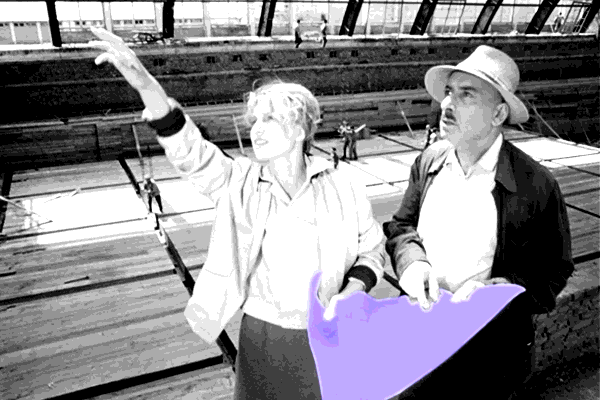
Erti tsis kvesh
1961
Georgia
Lana Gogoberidze
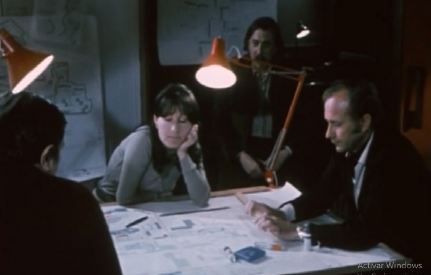
Quelque part quelqu’un
1972
France
Yannick Bellon
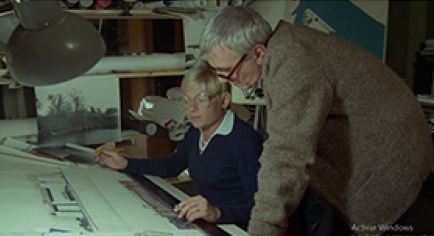
Debiutantka
1982
Poland
Barbara Sass
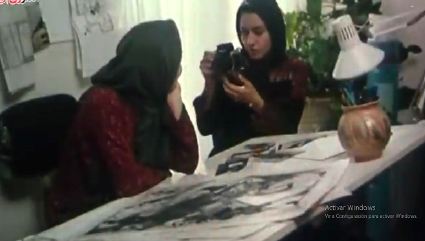
Do Zan
1999
Iran
Tahmineh Milani
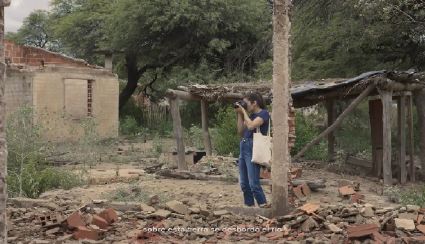
Husek
2021
Argentina
Daniela Seggiaro
Lana Gogoberidze, Georgia, 1961
Erti tsis kvesh
Título en español: Bajo un mismo cielo
Directora: Lana Gogoberidze.
Guión: Lana Gogoberidze, Leo Qiacheli, Archil Sulakauri (novela)
Música: Rezo Lagidze
Fotografía: Levan Paatashvili
Año y país de producción: 1961, Georgia (Unión Soviética)
Productor: G. Gvenetadze.
Productora: Georgian-Film (Qartuli Pilmi)
Distribuidora:Goskino
Género: Histórico, Drama, Romance
Arquitecta protagonista:Rusudan (Guranda Gabunia)
Title in English: Under the Same Sky
Director: Lana Gogoberidze.
Screenplay: Lana Gogoberidze, Leo Qiacheli, Archil Sulakauri (novel)
Music: Rezo Lagidze
Cinematography: Levan Paatashvili
Year and country of production: 1961, Georgia (Soviet Union)
Producer: G. Gvenetadze
Production company: Georgian-Film (Qartuli Pilmi)
Distributor: Goskino
Genre: Historical, Drama, Romance
Architect protagonist: Rusudan (Guranda Gabunia)
Sinopsis
Basándose en el relato corto Tavadis Kali Maya/ Княжна Майя (Princesa Maya,1927), del escritor Leo Qiacheli, y en las historias Mtredebi/Голуби (Palomas) y Preska/ Фреска (Fresco), del poeta y novelista Archil Sulakauri, ambos georgianos, el filme construye un tríptico que muestra tres historias románticas protagonizadas por tres mujeres georgianas, separadas entre sí por veinte años.
Princesa Maya tiene lugar en 1921, cuando los bolcheviques llegan al poder, y cuenta la trágica historia de la condesa Maya (Liana Asatiani), que se muestra impasible ante los intentos del enamorado Bondo (Otar Megvinetukhutsesi) de conquistarla a orillas del Mar Negro, hasta su desenlace fatal.
Ambientada en 1941, Palomas se desarrolla en el Tbilisi de comienzos de la Segunda Guerra Mundial y muestra el surgimiento del amor entre los aún adolescentes Levani (Givi Kiasashvili) y Nana (Kira Andronikashvili), mientras montan guardia en un tejado, rodeados de palomas. Un amor nunca expresado verbalmente: su historia se detendrá abruptamente cuando él sea reclutado para ir al frente, dejando únicamente una nota. Tiempo después, Nana recibe un mensaje que le informa de que ha muerto en combate.
Fresco, situado en Tbilisi en pleno proceso de modernización de 1961, tiene lugar durante la construcción del titánico Palacio de los Deportes de la Ciudad, dirigido por la arquitecta Rusudani (Guranda Gabunia). Responsable de supervisar todos los aspectos de la obra, defenderá al pintor Zaza (Tengiz Archvadze), encargado de realizar un mural en ella, del que terminará por enamorarse. El día de la inauguración del estadio deportivo, el mural se exhibe en todo su esplendor. Ilustrando tres momentos cruciales en la construcción de la Unión Soviética, el filme, que significaría el debut de Gogoberidze en el largometraje, se realizó para conmemorar el 40 aniversario de la URSS, y contaría para ello con un abultado presupuesto, si bien esto no le evitaría problemas con una censura que consideraría el film ‘asoviético’.
Synopsis
Drawing on the short story *Princess Maya* (1927) by writer Leo Qiacheli, and the tales *Pigeons* and *Fresco* by poet and novelist Archil Sulakauri—both Georgian authors—the film constructs a triptych featuring three romantic stories centred on three Georgian women, set twenty years apart.
Princess Maya takes place in 1921, as the Bolsheviks rise to power, and recounts the tragic tale of Countess Maya (Liana Asatiani); she remains unmoved by the romantic overtures of Bondo (Otar Megvinetukhutsesi) on the shores of the Black Sea, right up to the story’s fatal conclusion.
Set in 1941, Pigeons unfolds in Tbilisi at the start of World War II, depicting the blossoming romance between teenagers Levani (Givi Kiasashvili) and Nana (Kira Andronikashvili) as they keep watch from a rooftop surrounded by pigeons. Theirs is a love never spoken aloud; the story comes to an abrupt halt when he is conscripted for the front, leaving behind only a note. Some time later, Nana receives word that he has died in battle.
Fresco, set in 1961 amidst Tbilisi’s modernisation, takes place during the construction of the city’s colossal Sports Palace, a project led by architect Rusudani (Guranda Gabunia). Responsible for overseeing every aspect of the build, she champions the painter Zaza (Tengiz Archvadze)—commissioned to create a mural for the venue—and eventually falls in love with him. On the day the sports arena opens, the mural is revealed in all its splendour. Illustrating three crucial moments in the construction of the Soviet Union, the film—which marked Gogoberidze’s feature debut—was produced to commemorate the 40th anniversary of the USSR. It was backed by a substantial budget, though this did not spare it from problems with censors, who deemed the film “un-Soviet.”
Yannick Bellon, Francia, 1972
Quelque part quelqu’un
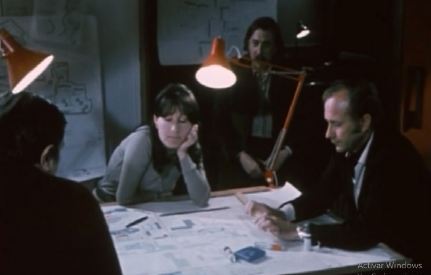
Título en español: En algún lugar, alguien
Directora: Yannick Bellon
Guión: Yannick Bellon
Música: Georges Delerue
Fotografía: Georges Barsky
Año y país de producción: 1972, Francia, Alemania
Producción: Jacqueline Doye
Compañía: Les Films de l’Équinoxe, Télé-Europe
Género: Drama
Arquitecta protagonista: Raphaële (Loleh Bellon)
Title in English: Somewhere, Someone
Director: Yannick Bellon
Screenplay: Yannick Bellon
Music: Georges Delerue
Cinematography: Georges Barsky
Year and Country of Production: 1972, France, Germany
Production: Jacqueline Doye
Production Company: Les Films de l’Équinoxe, Télé-Europe
Genre: Drama
Protagonist (Architect): Raphaële (Loleh Bellon)
Sinopsis
Ambientado en 1972, en las postrimerías de mayo del 68, el filme es un retrato del París de principios de los años 70,una ciudad en pleno proceso de destrucción y reconstrucción, a través de los ojos de varios personajes.
Raphaële (Loleh Bellon) es una mujer de clase media. Arquitecta, soltera y de mediana edad, su vida transcurre en un entorno fundamentalmente masculino, con colegas hombres y una relación destructiva con Vincent, periodista económico y corredor de bolsa de día que de noche trata de escribir una novela mientras se destruye con el alcohol.La película entrelaza su historia con las de otras mujeres de clase trabajadora: una anciana a punto de ser desahuciada junto con su marido, una joven que va a ser abandonada por su pareja, y una enfermera de mediana edad. Todas ellas representan la vida cotidiana en una ciudad melancólica, estresante, ruidosa e inhóspita para las mujeres.
Como una postmoderna flâneuse, Raphaële guía el ojo de la cámara a través de un París poblado de mujeres solitarias que se cruzan y deambulan por sus calles.
Con un lenguaje visual que alterna entre el documentaly la nouvelle vague, y una narrativa fragmentada, en la que escenas de diálogo se alternan con vistas de París, el filme aparece como un melancólico retrato de un París tan en descomposición como la vida de sus personajes, en elque los paisajes urbanos más reconocibles del París histórico -Montmartre, la Place de la Concorde, Notre-Dame-contrastan con los desastrados inmuebles de la periferia, y el proceso de gentrificación de distritos como Belleville.
Synopsis
Set in 1972—in the wake of May ’68—the film portrays early-1970s Paris, a city undergoing a process of destruction and reconstruction, seen through the eyes of several characters.
Raphaële (Loleh Bellon) is a middle-class woman. A single, middle-aged architect, she navigates a predominantly male environment—working with male colleagues and maintaining a destructive relationship with Vincent, a financial journalist and stockbroker by day who attempts to write a novel by night while self-destructing through alcohol. The film intertwines her story with those of other working-class women: an elderly woman facing eviction alongside her husband, a young woman about to be abandoned by her partner, and a middle-aged nurse. Together, they embody daily life in a city that is melancholic, stressful, noisy, and inhospitable to women.
Like a postmodern flâneuse, Raphaële guides the camera’s eye through a Paris populated by solitary women who cross paths and wander its streets.
With a visual style that shifts between documentary and Nouvelle Vague aesthetics, and a fragmented narrative—alternating dialogue scenes with views of the city—the film emerges as a melancholic portrait of a Paris as decaying as the lives of its characters. Here, the most recognisable landmarks of historic Paris—Montmartre, Place de la Concorde, Notre-Dame—contrast with the dilapidated buildings of the outskirts and the gentrification of districts like Belleville.
Barbara Sass, Polonia, 1982
Debiutantka
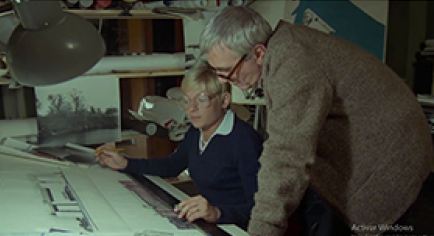
Título en español: Debutante
Directora: Barbara Sass
Guión: Barbara Sass
Música: Maciej Malecki
Fotografía: Wiesław Zdort
Año y país de producción: 1981, Polonia
Producción:Jacqueline Doye
Compañía: Zespół Filmowy Kadr
Género: Drama
Arquitectas protagonistas: Ewa Orzechowska (Dorota Stałinska), Maria (Elżbieta Czyzewska)
Title in English: Debutante
Director: Barbara Sass
Screenplay: Barbara Sass
Music: Maciej Malecki
Cinematography: Wiesław Zdort
Year and Country of Production: 1981, Poland
Production: Jacqueline Doye
Company: Zespół Filmowy Kadr
Genre: Drama
Architect Protagonists: Ewa Orzechowska (Dorota Stalińska), Maria (Elżbieta Czyżewska)
Sinopsis
Ewa es una prometedora arquitecta, recién graduada en Varsovia. Pese a haber recibido una beca para ir al extranjero, decide renunciar a ella y unirse al equipo de un reputado arquitecto que acaba de regresar a Polonia, impulsado por la gloria de sus éxitos internacionales, y trabajar en Gdansk, en el proyecto del nuevo Museo Marítimo.
El ambiente en el estudio de Jerzy es tenso: él rara vez está, y la oficina está a cargo de su colaboradora más antigua, María. Tras varios intentos fallidos, Ewa finalmente logra reunirse con él y entablar una conversación que termina en una disputa. Pese a esto, Jerzy le propone mudarse a su villa junto al mar, donde también viven su esposa, Bożena, y María, y trabajar con él. Desoyendo las advertencias de sus compañeros, accede a ello e internándose en el universo personal de Jerzy, un mundo marcado por la ambición y la megalomanía, cuyo protagonista, un tirano manipulador al borde del colapso, ahoga sus frustraciones en la bebida.
La vida personal de Jerzy está marcada por sus relaciones con las diferentes mujeres que va situando a su alrededor, atraídas por su carisma: Bożena, una mujer insegura y algo infantil; María, enamorada de él y con la que engaña a la primera; y otras que vienen y van, visitando la villa ocasionalmente. La llegada de Ewa rompe el tenso equilibrio de las relaciones. Jerzy se siente claramente atraído por su ambición, juventud, inteligencia y carácter enérgico, lo que la convierte en una rival a los ojos de María. Bożena, por el contrario, ve en ella un alma gemela que la ayude a liberarse del aislamiento al que su marido la ha condenado.
Synopsis
Ewa is a promising architect who has just graduated in Warsaw. Despite receiving a scholarship to go abroad, she decides to turn it down and join the team of a renowned architect—who has recently returned to Poland riding the wave of international success—to work on the new Maritime Museum project in Gdańsk.
The atmosphere in Jerzy’s studio is tense; he is rarely present, and the office is run by his long-time associate, Maria. After several failed attempts, Ewa finally meets him, but their conversation ends in an argument. Nevertheless, Jerzy invites her to move into his seaside villa—where his wife, Bożena, and Maria also live—and work alongside him. Ignoring her colleagues’ warnings, she accepts, stepping into Jerzy’s personal universe—a world defined by ambition and megalomania, presided over by a manipulative tyrant on the verge of collapse who drowns his frustrations in alcohol.
Jerzy’s personal life is shaped by his relationships with the various women he draws into his orbit through his charisma: Bożena, an insecure and somewhat childlike woman; Maria, who is in love with him and with whom he cheats on his wife; and others who come and go, visiting the villa occasionally. Ewa’s arrival disrupts this tense web of relationships. Jerzy is clearly drawn to her ambition, youth, intelligence, and spirited character, making her a rival in Maria’s eyes. Bożena, conversely, sees in her a kindred spirit who might help her break free from the isolation her husband has imposed upon her.
Tahmineh Milani, Irán, 1999
Do Zan
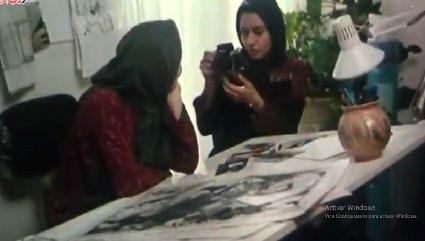
Título en español: Dos Mujeres
Directora: Tahmineh Milani
Guión:Tahmineh Milani
Música:Jesse Lucas
Fotografía:Marissa Floirendo
Año y país de producción: 1999, Irán
Producción: Digna H. Santiago
Compañía: Arman Film, Arta Film
Género: Drama, Romance
Arquitecta protagonista:Roya Rafei (Merila Zare’i), Fereshteh Namavar (Niki Karimi)
Title in English: Two Women
Director: Tahmineh Milani
Screenplay: Tahmineh Milani
Music: Jesse Lucas
Cinematography: Marissa Floirendo
Year and Country of Production: 1999, Iran
Production: Digna H. Santiago
Production Company: Arman Film, Arta Film
Genre: Drama, Romance
Architect Protagonists: Roya Rafei (Merila Zare’i), Fereshteh Namavar (Niki Karimi)
Sinopsis
Dos estudiantes de arquitectura, Fereshteh y Roya, se hacen amigas después de que la segunda pida ayuda a la brillante Fereshteh con un trabajo de la universidad.
Mientras Roya, procedente de una familia acomodada, termina sus estudios, se casa con un compañero de clase y la vemos dirigir una obra profesionalmente como arquitecta, Fereshteh tiene una vida completamente opuesta. Su familia la obliga a abandonar sus estudios tras un accidente de coche provocado por un hombre que la acosaba y amenazaba. Posteriormente, es obligada a casarse con un hombre mayor que ella, quien incumple su promesa de permitirle volver a estudiar. Este hombre, además, la somete y la abusa psicológicamente, lo que, de acuerdo con las leyes del país, no constituye un motivo suficiente para que Fereshteh pueda divorciarse de él.
Finalmente, Fereshteh conseguirá ser libre, pero aunque parte de su rebeldía se ha mantenido a lo largo de los años, su espíritu parece no ser el mismo que el de la joven que una vez fue.
Synopsis
Fereshteh and Roya, two architecture students, become friends after Roya asks the brilliant Fereshteh for help with a university assignment.
While Roya—who comes from a well-to-do family—manages to complete her studies, marry a classmate, and establish herself as a professional architect overseeing construction sites, Fereshteh’s life takes a completely different path. Her family forces her to drop out of school following a car accident caused by a man who had been harassing and threatening her. Subsequently, she is compelled to marry an older man who breaks his promise to let her resume her studies; furthermore, he subjects her to psychological abuse and control—grounds that, under the country’s laws, are insufficient for divorce.
Fereshteh eventually gains her freedom, but although a spark of her rebellious nature has endured over the years, her spirit no longer seems to be the same as that of the young woman she once was.
Daniela Seggiaro, Argentina, 2021
Husek
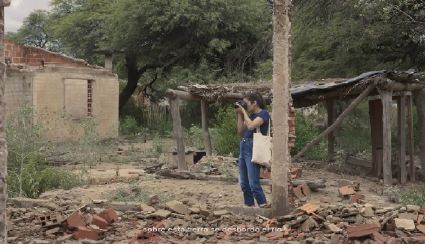
Título en español: Husek
Directora: Daniela Seggiaro
Guión: Daniela Seggiaro y Osvaldo Villagra
Música: Whisky
Fotografía: Guillermo Saposnik
Año y país de producción: 2021, Argentina
Producción: Álvaro Urtizberea
Compañía: Vista Sur Films, MaravillaCine (productora asociada)
Género: Drama
Arquitecta protagonista: Ana (Verónica Gerez), Andrea (Justina Ovejero, reparto)
Title in English: Husek
Director: Daniela Seggiaro
Screenplay: Daniela Seggiaro and Osvaldo Villagra
Music: Whisky
Cinematography: Guillermo Saposnik
Year and Country of Production: 2021, Argentina
Producer: Álvaro Urtizberea
Production Company: Vista Sur Films, MaravillaCine (associate producer)
Genre: Drama
Architect Protagonist: Ana (Verónica Gerez); Andrea (Justina Ovejero, cast)
Sinopsis
Habitar el territorio de las culturas indígenas del Gran Chaco genera movimientos comunitarios junto al monte y al río, fuentes de vida. El gobierno local planea un nuevo orden territorial que incluye un barrio de casas populares y el desplazamiento de las familias indígenas hacia la periferia urbana. Ana es la arquitecta a cargo del proyecto. Valentino es el cacique de su comunidad y, junto a su nieto Leonel, intentará actuar como mediador ante lo que consideran un nuevo atropello cultural.
Ana (Verónica Gerez) es una arquitecta que trabaja para el gobierno chaqueño. Su trabajo consiste en completar la adaptación de un proyecto de viviendas a la realidad del terreno y en negociar el traslado de una comunidad wichí desde sus tierras a dichas viviendas. A lo largo de la película, y gracias al contacto directo con Leonel, Valentino y el resto de la comunidad, Ana va adquiriendo conocimientos y tomando conciencia de la importancia de la arquitectura como terreno político y como herramienta de colonización que replica dinámicas de poder institucional y territorial. Bajo la idea de modernización y progreso, el conflicto surge cuando se trata de desplazar a la población indígena, a la que se le dificulta la representación institucional y el acceso a sus derechos. El contrapunto al personaje de Ana lo presentan el resto de los colegas varones (tanto políticos como arquitectos), así como el personaje de Andrea, quien también opera a favor del engranaje institucional.
Synopsis
Inhabiting the territory of the indigenous cultures of the Gran Chaco fosters community life alongside the forest and the river—sources of life. The local government is planning a new territorial layout that includes a public housing development and the relocation of indigenous families to the urban periphery. Ana is the architect in charge of the project. Valentino leads his community; together with his grandson Leonel, they try to act as mediators in the face of what they see as a new cultural affront.
Ana (Verónica Gerez) is an architect working for the Chaco provincial government. Her job involves finalising a housing project to suit the terrain and negotiating the relocation of a Wichí community from their ancestral lands to these new homes. Throughout the film, and through direct contact with Leonel, Valentino, and the rest of the community, Ana gains insight and becomes aware of architecture as a political arena—a tool of colonisation that replicates institutional and territorial power dynamics. Driven by notions of modernisation and progress, the conflict arises from the attempt to displace the indigenous population, a group that already struggles with institutional representation and access to their rights. Ana’s character is contrasted with her male colleagues (both politicians and architects) and with Andrea, another figure who operates within the institutional machinery.
Si te interesa este ciclo de cine y quieres reproducir alguna de las películas en tu universidad, escuela de arquitectura o institución, puedes contactar con el equipo WAR/F para ello.
If you are interested in this film series and would like to screen any of the films at your university, school of architecture, or institution, you can contact the WAR/F team to arrange it.